Shipping frozen food with dry ice comes down to three questions: how much do you need per box, how do you pack the box so it stays cold without building up pressure, and what does the carrier need to see on the outside. Get those three right and a box of frozen meals, seafood, or baked goods can travel across the country and arrive solid.
This is written for small food businesses and home shippers sending frozen food by courier or air, not for walk-in coolers or camping trips. The numbers below are a starting point per box. Your carrier has the final word on what they will accept.
How much dry ice do you need per box to ship frozen food?
Plan on about 5 lb of dry ice per insulated box for each 24 hours the box is in transit, then add roughly a day of margin for delays. An overnight box works out to around 10 lb. A box expected to take two days in the carrier's network wants about 15 lb per box. Those numbers assume a decent insulated box, not a cardboard carton with no liner.
Transit time is the variable most shippers get wrong. "Overnight" on the label does not always mean the box is opened and delivered within 24 hours of pickup. Sort delays, a missed connection, a weekend with no delivery: all of that adds hours the dry ice has to cover. Building in a day of margin costs you a few more pounds of ice per box. It beats a box of thawed product and a refund.
How do you pack the box so it vents properly?
Dry ice sublimates. It turns straight from solid to gas, and that gas has to get out of the box. Never tape the inner insulated liner shut airtight. A sealed container of sublimating dry ice builds up carbon dioxide gas as the temperature rises, and the pressure inside can rupture the packaging.
The usual setup is an insulated box (foam or a vacuum-insulated liner) sitting inside a sturdy outer shipping carton. The insulated box keeps the cold in and slows sublimation. The outer carton protects it in transit and gives couriers something solid to scan, stack, and label. Tape the outer carton shut normally. Leave the inner insulated box unsealed, or closed but not sealed airtight, so gas can escape through the seams.
For loading the box:
- Put a layer of dry ice slices on the bottom of the insulated box.
- Pack the frozen food on top of that layer.
- Add another layer of slices on top of the food.
- Fill the gaps around the food with crumpled paper or packing filler so nothing shifts in transit.
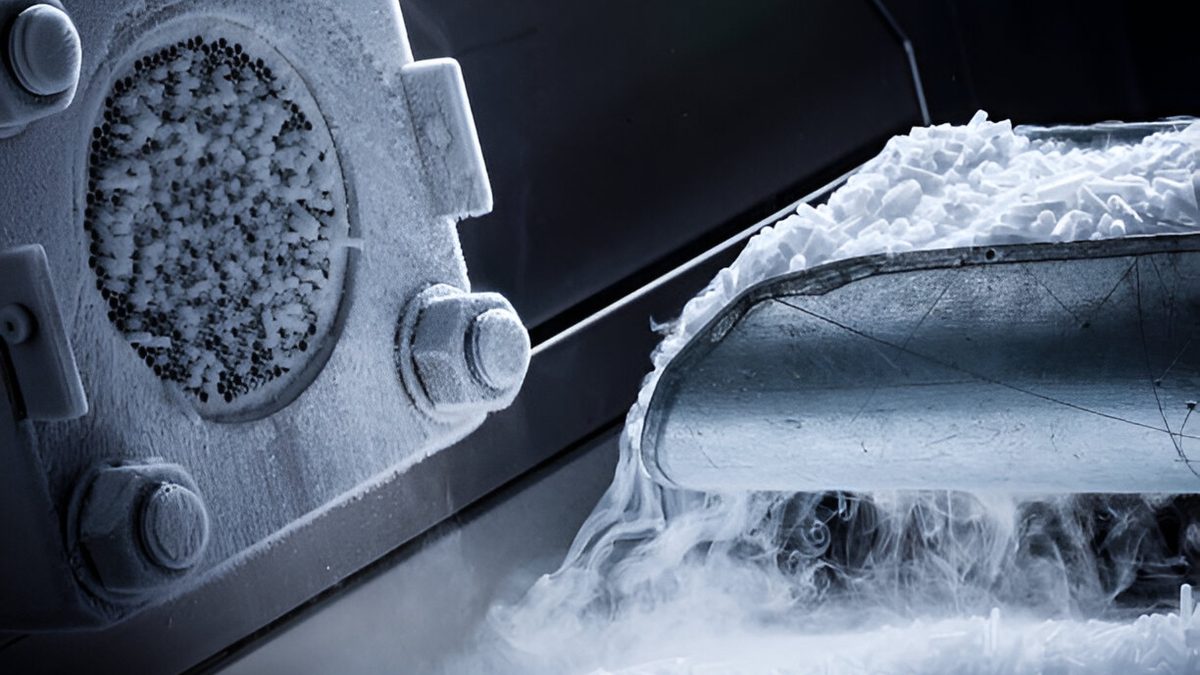
Slices sold in 5 lb packs of dry ice slices are shaped for exactly this: flat pieces that sit above and below a layer of food without crushing it. If you are shipping something less fragile, like frozen meal kits in rigid containers, 16 mm dry ice nuggets packed around the food work too. Nuggets sublimate more slowly than smaller pellets, which matters over a multi-day transit.
What goes on the label for a box going by air?
A box of dry ice traveling by air is dangerous goods. Carbon dioxide, solid, is the formal shipping name; most people just call it dry ice. The box needs to show "Dry ice" or "Carbon dioxide, solid," the UN number UN1845, and the net weight of the dry ice inside in kilograms. It also needs a Class 9 hazard label.
That is the baseline for air transport. Ground shipping within Canada has its own rules, and they are not identical to air rules. Some carriers want the same UN1845 marking on ground shipments too, especially if the box might connect to an air leg partway through its route. Others have a simpler process for small quantities by road.
Carriers also set their own limits on how much dry ice they will carry in a single box, what packaging they require, and what paperwork (if any) a shipper needs to file before the first shipment. These limits vary by carrier and can change. Check with yours before you ship, not after you have already packed the box. If you ship dry ice regularly, most carriers will walk you through their requirements once and then it is routine.
When should you get the dry ice?
Dry ice loses weight from the moment it is made. Pick it up or have it delivered the same morning you pack and ship the box, so the clock on sublimation starts as close to pickup as possible. Ordering a day ahead and letting it sit overnight just eats into the margin you built in for transit delays.
We make dry ice to order at our plant at 2-730 Eaton Way in Delta. Pickup runs Monday to Friday, 7 am to 4 pm, closed on BC statutory holidays. Order by 4:30 pm for pickup that same day if what you need is in stock, or by 2 pm for pickup the next working day. If you need it brought to you, our driver delivers across Metro Vancouver Monday to Friday, 8 am to 4 pm, with delivery priced by distance from the plant and shown at checkout before you pay. Call the office directly if you need it delivered sooner than the next working day.
Businesses shipping frozen food on a regular schedule can set up a standing order instead of placing a new order each time. Call 604 239 9333 to talk through a standing order, or place a one-off order through the shop page and choose pickup or delivery.
What else matters for shipping frozen food with dry ice?
Keep dry ice out of the passenger cabin of your vehicle on the way to pack or drop off the shipment, where that is practical. If it has to ride inside with you, crack a window so outside air can get in. Never leave dry ice in a parked car with the windows up. Drive straight to where the box gets packed or handed off.
Dry ice runs at -78.5 degrees Celsius, cold enough to cause cold burns on contact. Handle it with gloves and keep it away from kids and pets while you are packing boxes. If you want the full rundown on handling it safely, our article on whether dry ice is safe to handle covers burns, ventilation, and what to do if someone gets hurt. For a closer look at pellet size and how it affects sublimation rate, see our comparison of 3 mm pellets versus 16 mm nuggets.
Shipping frozen food is one use among several we see for dry ice in Metro Vancouver: coolers, freezer outages, fog for events, and dry ice blasting. Our dry ice uses page runs through weight guidelines for each of those.
Pack the box, get the amount right per box for your transit time plus a margin day, label it the way your carrier wants, and order the dry ice for the morning you ship. Place your order and choose pickup or delivery at our shop page, and call 604 239 9333 first if you have questions about a standing order or a box going somewhere past 100 km from Delta.
Frequently asked questions
How much dry ice do I need to ship a box of frozen food?
Plan on about 5 lb of dry ice per insulated box for each 24 hours it spends in transit, plus roughly a day of margin for delays. An overnight box usually needs around 10 lb, and a two-day box needs around 15 lb. These are starting points: a well-insulated box holds cold longer than a thin cardboard one.
Should I tape the dry ice box shut completely?
No. Dry ice sublimates into gas, and that gas needs somewhere to go. Tape the outer shipping carton shut as normal, but leave the inner insulated box unsealed, or closed without being airtight, so gas can vent through the seams. A sealed container of sublimating dry ice can build up pressure and rupture the packaging.
What labels does a dry ice shipment need for air transport?
A box of dry ice going by air needs to show the words "Dry ice" or "Carbon dioxide, solid," the UN number UN1845, the net weight of the dry ice in kilograms, and a Class 9 hazard label. Ground shipping rules can differ, so check your carrier's specific requirements before your first shipment.
Should I use dry ice slices or nuggets for shipping frozen food?
Slices, sold in 5 lb packs, work well as flat layers above and below the food in the box. 16 mm nuggets packed around the food also work and sublimate more slowly than smaller pellets, which helps on longer transit times. Either size can ship frozen food; the right choice depends on how the box is packed.
Need dry ice? Order online and pick up at our plant in Delta, or have it delivered. Not sure how much? See how much dry ice you need.