Dry ice blasting pellets start losing mass the moment they come out of the press. That is not a defect, it is how dry ice works everywhere, in a cooler, a shipping box or a blast hopper. For a blasting contractor, pellet age changes how hard the pellet hits, and that changes the job.
This piece is for crews running blast media through a machine on a schedule: plant maintenance, mold cleaning, coatings, fire restoration. We will cover why older pellets blast softer, how to store pellets between loads so they last the day, and how to size an order against the hours you plan to run.
Does pellet age affect a dry ice blasting job?
Yes. A pellet sublimates from the surface in, so an older pellet is smaller and lighter than it was at the press. Blast force in dry ice blasting comes from the pellet's mass and velocity together, not velocity alone, so a lighter pellet carries less impact energy into the nozzle stream even at the same air pressure. You end up running more pellets, more passes, or more pressure to get the same result.
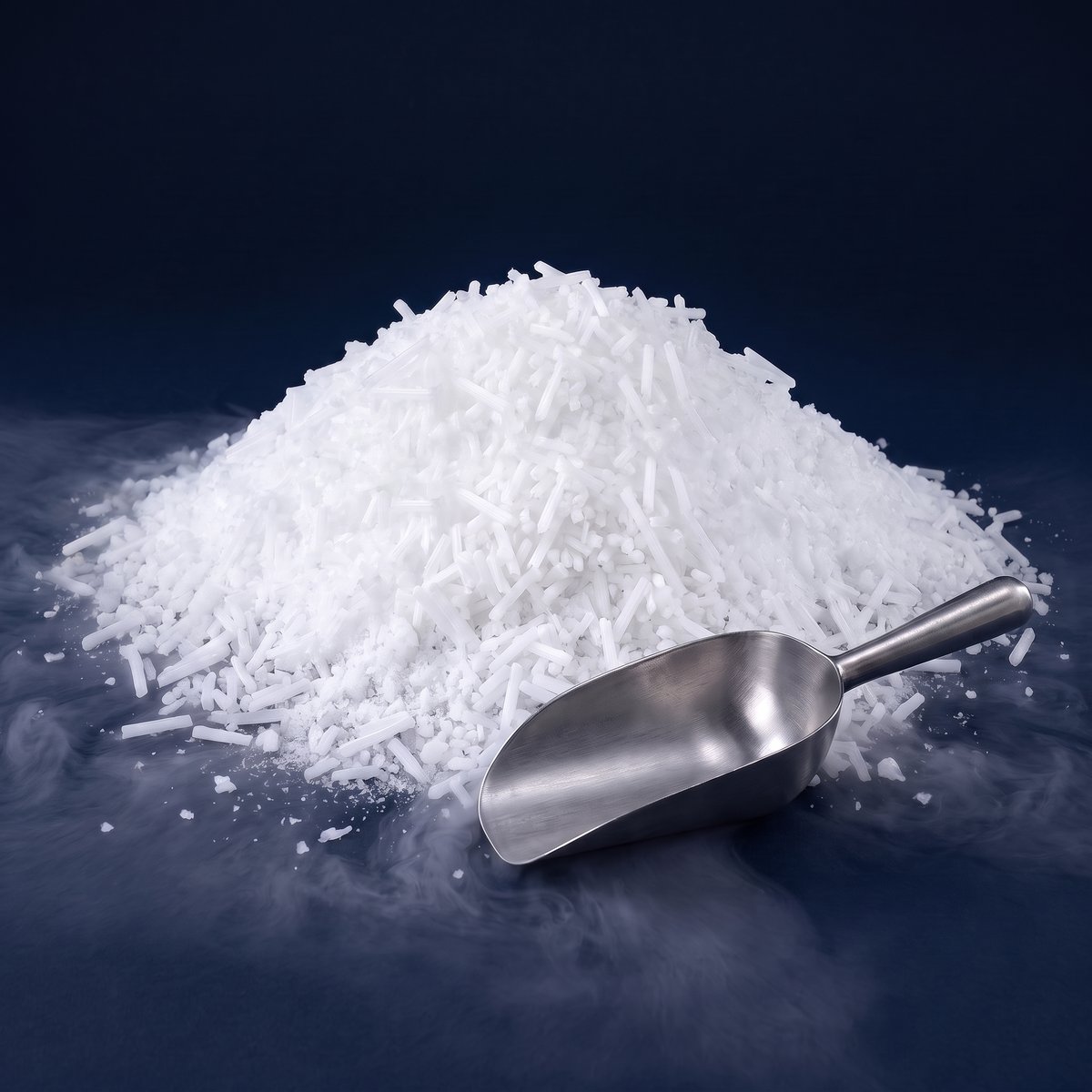
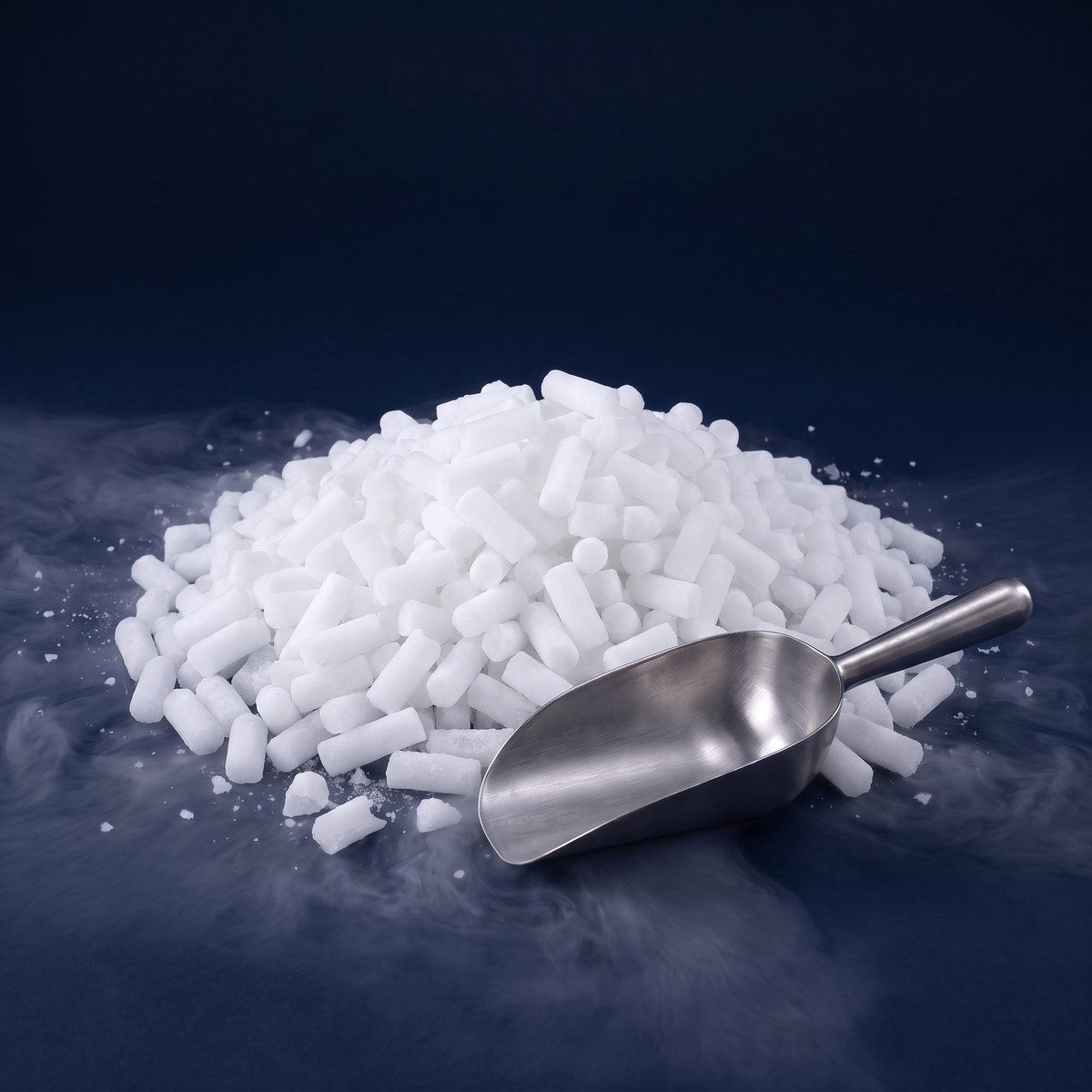
The pellet itself does not change shape evenly. Sublimation eats at edges and corners first, so a pellet that started as a clean 3 mm cylinder slowly rounds off and shrinks. A smaller pellet has more surface area relative to its volume, which speeds up how fast it keeps sublimating. That is the whole mechanism behind a batch of dry ice blasting pellets going soft after sitting around: nothing melted, nothing leaked, the mass is gone to gas.
Why does a lighter pellet hit softer?
Blast force depends on mass times velocity. Your machine controls velocity through air pressure, but it cannot put mass back into a pellet that has already sublimated part of itself away. A pellet made close to the blast day has more material packed into that diameter than one that has spent several days shrinking in a hopper. Feed the machine the same pellet count per minute and the older load delivers less impact energy to the surface.
For light cleaning work this barely matters. For mold release, coatings removal or anything where you are counting on a set impact energy to do the job in a set number of passes, pellet age shows up as slower throughput and more rework. Crews on tight schedules notice it first as the machine feeling weaker, when the cause is the pellet, not the equipment.
Buying pellets close to the blasting day
We make pellets to order at our plant in Delta for the pickup or delivery day you choose at checkout, rather than holding stock that ages on a shelf before it reaches you. The practical move for a blasting crew is to time the order to the job, not the calendar: book pellets for pickup or delivery as close as you can to the day you run the machine, and avoid letting a load sit for several days before it goes through the hopper.
Same-day pickup works when the order is in stock and you place it by 4:30 pm. Otherwise order by 2 pm for pickup the next working day. Delivery across Metro Vancouver runs Monday to Friday, 8 am to 4 pm, and you pick a morning or afternoon window at checkout; order by 2 pm for delivery the next working day, or call the office if you need it the same day. Pickup is at 2-730 Eaton Way in Delta, Monday to Friday 7 am to 4 pm, closed on BC statutory holidays.
If you are weighing pellet size against nugget size for other parts of your operation, our 3 mm vs 16 mm dry ice guide breaks down when each size earns its keep. For blasting specifically, 3 mm is the standard feed size most blasting machines are built around, and you can order it by the pound at 3 mm dry ice pellets.
Storing pellets between loads on site
Once pellets are on your truck or at the job site, how you hold them between loads decides how much blast force you still have by the afternoon shift.
- Keep the bin lid closed between loads. It should not be sealed airtight, dry ice always needs to vent, but a closed lid slows the sublimation that a wide-open bin invites.
- Keep the bin out of direct sun. Sun load on a dark bin raises the internal temperature even on a cool day.
- Keep it out of a hot truck cab or a closed van box sitting in the sun at lunch. A parked vehicle heats up fast, and that heat works on the pellets the whole time you are not using them.
- Move pellets from bin to hopper in batches sized to the next hour or two of work, not the whole day's supply at once, so the bulk of your order stays in insulated storage as long as possible.
None of this stops sublimation. It slows it. A pellet pulled from a closed, shaded bin after four hours on site still hits harder than one left open in the truck bed in the sun for the same four hours.
Sizing a blasting order to the job
Order sizing for blasting work comes down to one question: how many hours will the machine run, feeding pellets, today. Pad that number, because setup, troubleshooting and a slower afternoon all burn pellets without stripping anything.
Size the order to your planned blast hours plus a margin, not to a round number that feels safe. A crew running a half-day job on light coatings needs a different order than one running a full eight-hour shift on heavy mold buildup, and guessing high just in case either wastes money or leaves pellets sitting around losing mass before the next job. Track pellet use per hour on a few jobs and use that number going forward, rather than a one-size estimate.
For larger jobs, orders of 150 lb and up go out in our returnable insulated bins, rented by the week, each one numbered so you can track which bin came from which order. That matters for a crew running several job sites off one delivery: you know what is in each bin and when it needs to go back. For high-volume work, 500 lb orders are available online in a returnable bin through bulk 3 mm dry ice pellets, 500 lb.
Standing orders for crews that blast every week
If your crew is on a regular blasting schedule, a standing order takes the guesswork out of each week's pickup or delivery. We quote standing orders for businesses that need the same volume on a recurring basis, so you are not placing a new order every time and risking a gap between when pellets are made and when they hit the hopper. Call 604 239 9333 to set one up against your blast hours.
A standing order also keeps pellet age consistent week to week, which matters if you are tracking blast performance across jobs. Pellets made to the same schedule and picked up or delivered on the same day each week behave the same way in the hopper, instead of one week's batch being a day older than the last.
Handling pellets safely between the bin and the machine
Dry ice sits at -78.5 degrees Celsius, well below anything skin should touch directly, and direct contact can cause cold burns or frostbite. Wear gloves when loading hoppers or handling bins, and work in a space with enough airflow, since sublimating dry ice gives off carbon dioxide gas as it shrinks, and that gas can build up in a poorly ventilated space. If you are new to handling dry ice on a job site, our guide to handling dry ice safely covers gloves, ventilation and what to do for a cold burn.
If pellets travel in a vehicle before reaching the job, keep them out of the passenger cabin where you can, and crack a window if they have to ride inside. Never leave a load in a parked, closed vehicle. Drive straight from pickup to the site rather than running other errands first, since every extra hour in a hot cab is mass the pellets will not get back.
Order 3 mm dry ice blasting pellets for pickup or delivery, sized to your next job, at polarsharks.ca/shop, or call 604 239 9333 to set up a standing order for your crew.
Frequently asked questions
Why do older dry ice pellets blast softer?
Pellets sublimate from the surface from the moment they are made, so an older pellet is smaller and lighter than a new one. Blast force depends on mass and velocity together, and a machine cannot restore mass that has already turned to gas. A lighter pellet carries less impact energy into the nozzle stream, so it strips less material per pass.
How should we store dry ice blasting pellets between loads on site?
Keep the bin lid closed between loads, though not sealed airtight, since dry ice always needs to vent. Keep the bin out of direct sun and out of a hot truck cab or closed van. Move pellets from bin to hopper in small batches sized to the next hour or two of work, so most of the order stays insulated as long as possible.
How much dry ice should a blasting crew order for a job?
Size the order to the hours the machine will run feeding pellets, plus a margin for setup and slower stretches. Track pellet use per hour across a few jobs and use that figure going forward instead of a flat estimate. Orders of 150 lb or more go out in numbered, returnable insulated bins, rented by the week.
Can a blasting crew set up a standing weekly order for pellets?
Yes. Standing orders are quoted for businesses that blast on a regular schedule, so pellets arrive on the same day each week sized to actual needs. This keeps pellet age consistent from week to week, which helps if you are tracking blast performance, and avoids placing a new order every time. Call 604 239 9333 to set one up.
Need dry ice? Order online and pick up at our plant in Delta, or have it delivered. Not sure how much? See how much dry ice you need.