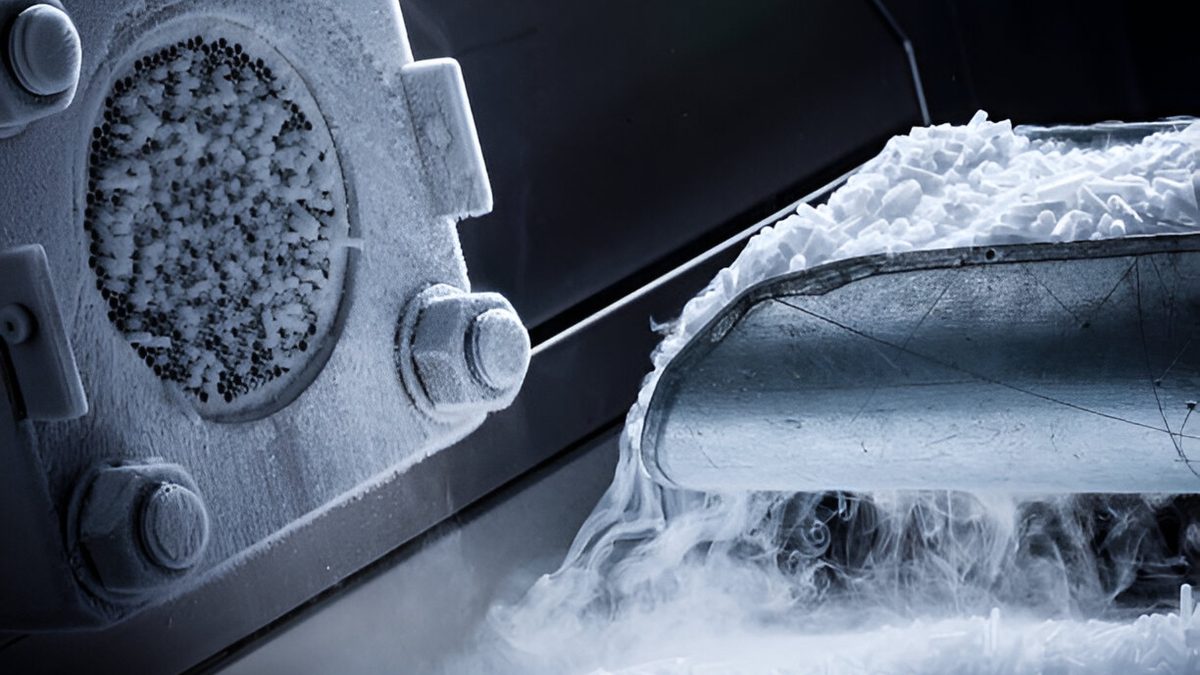
Dry ice shows up at a lot of kitchen counters, coolers and Halloween parties this time of year, and the first question most people ask is simple: is dry ice safe to touch? The short answer is no, not with bare skin, and there are a few other rules worth knowing before you bring it into your house or car.
We make dry ice to order at our plant in Delta, and this article walks through the safe handling rules worth knowing before your order arrives. None of this is complicated. It just takes a minute to get right.
Is dry ice safe to touch with bare hands?
No. Dry ice sits at -78.5 degrees Celsius (-109.3 degrees Fahrenheit), cold enough to injure skin in seconds of direct contact. The damage looks and behaves like a frostbite burn. Use insulated gloves or tongs any time you handle it, and keep bare skin away from the surface even for a quick touch.
What happens if you touch dry ice without gloves?
Skin contact with dry ice can cause a burn that looks like redness, swelling or a blister, and in some cases the skin can look waxy or thickened. It happens fast because the temperature difference between your hand and the ice is enormous. A brief brush might just sting. Holding a piece, or pressing it against skin, can do real damage in a few seconds, and sometimes the full extent of the injury does not show until a day later.
If that happens, warm the area gradually with lukewarm water and get medical help for any blistering, numbness that does not go away, or a burn that looks deep. Do not rub the skin or apply direct heat.
Why does dry ice need gloves and tongs every time?
Dry ice is solid carbon dioxide. It does not melt into liquid the way water ice does. It sublimates, turning straight from solid to gas, and that gas leaves the surface cold the entire time the block or pellets are shrinking. There is no "it's just a bit melty now" stage where it is safer to handle. A piece that looks small and harmless is still -78.5 C until it is gone.
Kitchen tongs work for small amounts. Insulated or heavy leather gloves work for bigger jobs like loading a cooler or a freezer. Keep a pair near wherever you store or use dry ice so grabbing gloves is not an afterthought and safe handling stays the default.
Can dry ice gas be dangerous indoors?
Yes, in a closed space. As dry ice sublimates it releases carbon dioxide gas, and in a small room, a car, a basement or a walk-in cooler with the door shut, that gas can build up and push out the oxygen in the air. One kilogram of dry ice expands into roughly 760 litres of carbon dioxide gas as it sublimates, which is why even a modest amount can change the air in a tight, unventilated space. You will not smell it or see it coming: carbon dioxide is colourless and odourless. Open a window or door and let air move through any space where dry ice is sitting, melting down, or being used for fog.
This matters most in cars. Keep dry ice out of the passenger cabin when you can, in the trunk or truck bed instead. If it has to ride inside the car, crack a window so outside air keeps coming in. Never leave dry ice in a parked car with the windows up and the doors shut, even for a short errand. Drive straight to wherever the ice gets used rather than running errands with it sitting in the back seat.
The same logic applies to walk-in coolers, cold rooms and any small unventilated space where dry ice blasting or shipping work happens. Prop a door, run a fan, or step out and let the air clear before working in a tight space for long.
Why can't you put dry ice in a sealed container?
Because the gas has to go somewhere. Dry ice needs to vent. A sealed jar, a corked bottle, or any airtight container will trap the carbon dioxide gas as it forms, and pressure builds until the container cracks, pops its lid, or in the worst case bursts. This is one of the most common ways people get hurt with dry ice, and it is entirely avoidable with a bit of care.
Coolers should sit with the lid on but not latched down. That keeps the cold in while letting gas escape around the edges. Fill empty space in a cooler with crumpled paper or towels instead of packing it airtight. The same rule applies to any container you use for shipping or short-term storage: lid on, never locked shut.
Keeping dry ice away from kids, pets and drinks
Dry ice is not food and it is not an ice cube. Never let anyone eat it, suck on it, or drop a loose piece into a drink to make it fizz and smoke. Swallowing it can cause oral or internal burns from the freezing cold, and dropping dry ice into a punch bowl for fog is fine as long as nobody swallows the piece itself.
Keep dry ice out of reach of children and pets the same way you would keep a hot pan out of reach: not on a low counter, not in an open cooler on the floor, not in a bucket a curious dog can get a nose into. For Halloween fog machines at a party with kids running around, keep the bucket somewhere it cannot be knocked over or grabbed, and supervise it the whole time it is running.
What should you do if someone gets a burn or has trouble breathing?
For a skin burn, warm the area slowly with lukewarm water and get medical help if there is blistering or the burn looks deep. For breathing trouble, dizziness or confusion around dry ice, which can mean carbon dioxide has built up in the air, get the person into open air right away and get medical help. Do not wait to see if symptoms pass on their own.
Where to find the full detail
This covers the questions people ask most, but it is not the whole picture. Our safety guide walks through handling, storage and transport in more detail, and the safety data sheet has the full technical information a workplace or shipping document might require. If you are planning a specific use, from a freezer outage to a film shoot, our uses page covers the common jobs dry ice gets put to.
Size matters for safe handling too. Smaller pellets sublimate faster and release gas more quickly for their weight, which is part of why our guide to 3 mm versus 16 mm pellets is worth a read before you order. If you are stocking a cooler for a weekend and want to know how much ice to buy and how long it holds, our numbers for coolers, cars and freezers break it down.
Handled right, dry ice is a straightforward tool: gloves on, lid unlatched, good airflow, out of reach of kids and pets. We make it to order at our plant in Delta, and dry ice loses weight from the moment it is made, so buy it close to when you plan to use it. Order your dry ice online and choose pickup or delivery at checkout.
Frequently asked questions
Is dry ice safe to touch for a second or two?
No. Even brief contact with bare skin can cause a burn because dry ice sits at -78.5 degrees Celsius. It behaves like frostbite and can cause redness, swelling or blistering. Always use insulated gloves or tongs to handle it, no matter how short the contact seems like it will be.
Why does dry ice need ventilation?
Dry ice sublimates into carbon dioxide gas as it sits out, and one kilogram can expand into roughly 760 litres of gas. In a small, closed space such as a car, basement or walk-in cooler, that gas can build up and displace the oxygen in the air without any smell or warning. Keep a window or door open wherever dry ice is stored or used.
Can you store dry ice in a sealed jar or cooler?
No. A sealed container traps the carbon dioxide gas as the ice sublimates, and pressure builds until the container cracks or bursts. Coolers should have the lid on but not latched, and any storage container needs room for gas to escape.
What should you do if dry ice causes a burn?
Warm the affected skin slowly with lukewarm water. Do not rub it or apply direct heat. Get medical help if you see blistering, numbness that does not go away, or a burn that looks deep. If someone has trouble breathing or feels dizzy near dry ice, get them into open air and seek medical help right away.
Need dry ice? Order online and pick up at our plant in Delta, or have it delivered. Not sure how much? See how much dry ice you need.