How long does dry ice last once it's in your car, your cooler or your freezer? There's no single answer. There's a range, and the range depends on how much insulation you're fighting with.
These are the numbers we use when we size an order.
How long does dry ice last in a cooler?
With the lid on but not latched, plan on 5 to 10 lb disappearing every 24 hours in a decent cooler. A three-day trip eats 15 to 30 lb. The low end of that range belongs to a thick-walled cooler packed full and kept in shade. The high end belongs to a thin cooler sitting in a hot trunk, opened every twenty minutes.
What pushes you toward 5 lb a day instead of 10
Fill the empty space. Crumpled newspaper or a towel cuts down the pocket of warm air sitting above the ice. Less air space, less heat to fight.
Keep the cooler in shade, not in direct sun and not in a hot car trunk all afternoon. And open it as little as you can stand. Every lid lift dumps the cold air out and pulls warm air in, and that warm air is what drives sublimation faster.
None of this stops the process. Dry ice sublimates, meaning it goes straight from solid to gas, it doesn't melt into a puddle the way regular ice does. Insulation slows that down, and a cooler is a box that buys you time.
How long does dry ice last in a car?
A warm car sits at the hot end of the cooler range, closer to 10 lb a day than 5. The bigger issue in a car is the air you breathe. The gas dry ice gives off is carbon dioxide, and in a closed car it builds up. Keep the cooler out of the passenger cabin where you can, in the trunk or a truck bed. If it has to ride inside, keep a window open so outside air comes in. Drive straight to where you need it, and never leave dry ice in a parked, closed car.
How long does dry ice last in a chest freezer during a power outage?
Different problem, same math underneath. A home freezer outage calls for roughly 1.5 lb per cubic foot for about a day of holding power. A 15 cu ft chest freezer wants somewhere around 20 to 25 lb to ride out a day without power.
Lay the dry ice on top of the frozen food, not underneath, since cold air sinks. Put a sheet of cardboard between the dry ice and the food so nothing freezes to it. Leave the freezer closed as much as you can and check on it rather than propping the door open to look.
Once the power is back, take any leftover dry ice out: at -78.5 °C it can trip the thermostat and switch the freezer off. And never put dry ice in a sealed container. The gas has nowhere to go and the pressure builds. Dry ice needs to vent. Lid on, not latched, every time.
What about shipping perishables?
If you're shipping food or samples, figure about 5 lb per insulated box per 24 hours in transit, and then add a day of margin for the unexpected: a delayed flight, a missed pickup window, a carrier reroute. An overnight box usually wants about 10 lb. A two-day box wants closer to 15 lb.
By air, a box with dry ice is marked "Dry ice" (or "Carbon dioxide, solid"), UN1845 and the net weight of dry ice in kilograms, and it carries a Class 9 label. Each carrier sets its own limits on top of that, so check with yours before you ship.
Does the size of the dry ice matter?
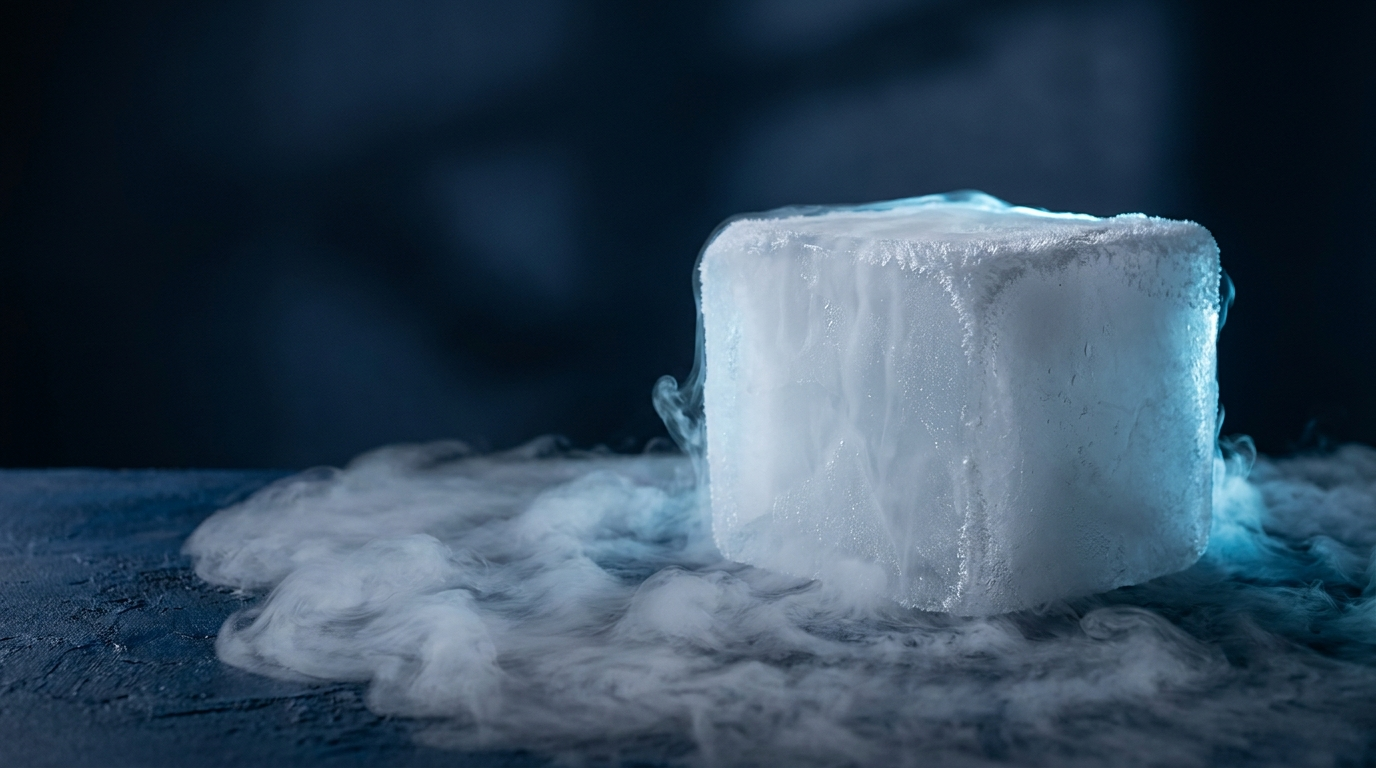
Yes, more than people expect. Bigger pieces last longer per pound than small ones, because sublimation happens at the surface, and smaller pieces pack more surface area into the same weight. A block or a slice holds up longer than the same weight in pellets.
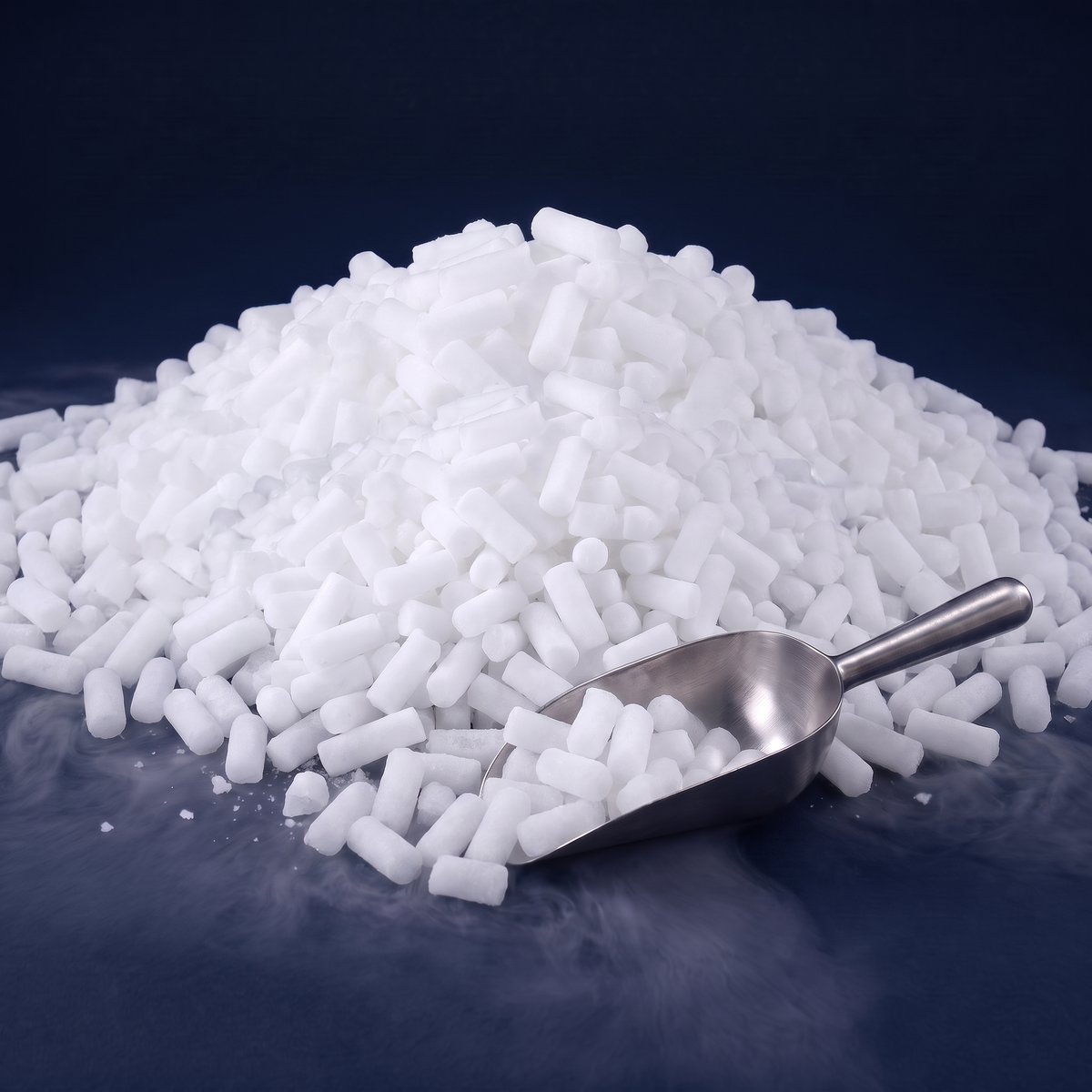
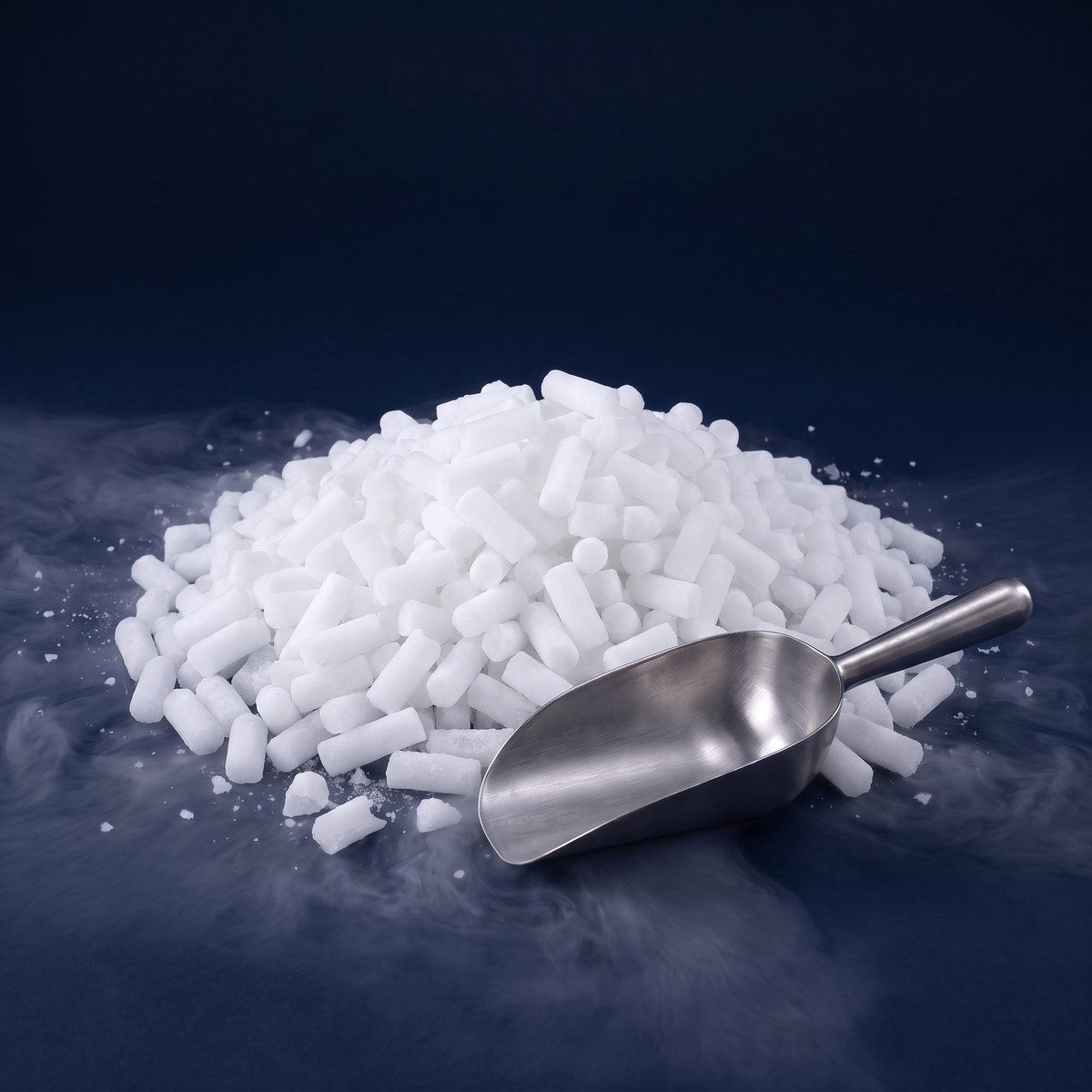
That's why slices tend to be the pick for coolers and long hauls where you want staying power, while pellets make sense when you need something that packs into odd spaces or fogs fast and hard. Nuggets land in the middle: they handle fog machines and cooler duty reasonably well without the surface-area penalty pellets carry. Our 16 mm dry ice nuggets work for most cooler and fog jobs, and our 5 lb dry ice slice packs are the better call when you want fewer pounds lost over a multi-day trip.
Timing your pickup or delivery so you don't waste any
The lever you control most is when you buy. Dry ice starts losing weight the moment it is made, so buying three days early means paying for pounds that are gone before you need them.
Order online and choose pickup or delivery. Same-day pickup works when the order is in stock. Otherwise, order by 2 pm for next-day pickup or delivery. Either way, buy as close to your event, trip, or outage as you reasonably can, and let the clock start when you need the cold, not three days before.
We're open Monday to Friday, 7 am to 4 pm, at our plant at 2-730 Eaton Way in Delta, BC. Closed on BC statutory holidays. We also deliver, Monday to Friday during the day, the next working day after you order. We do not ship by courier, so plan your timing around the pickup window or the delivery day.
A few more uses worth knowing the numbers for
Fog for a party or a haunted house runs on different math: by the bucket and by the minute, not by the day. It's broken down in our Halloween fog guide. For a longer outage there is a step-by-step on keeping a freezer cold with dry ice, and our dry ice uses page covers the rest, from shipping to cleaning to lab work.
Current prices are on the shop page. You can order any amount from 1 lb; an order under $25 of ice is charged $25 plus GST. Call 604 239 9333 if you'd rather talk it through, or order your dry ice online and pick a pickup window or a delivery day.
Frequently asked questions
How long does dry ice last in a cooler overnight?
In a cooler with the lid on but not latched, expect roughly 5 to 10 lb to sublimate every 24 hours. Overnight, that means a smaller loss than a full day, but the same range applies. A cooler packed full, kept in shade, and opened as little as possible lands near the 5 lb end rather than the 10 lb end.
Does dry ice melt like regular ice?
No. Dry ice sublimates, which means it turns from a solid straight into gas without ever becoming liquid. Regular ice melts into water, but dry ice leaves no puddle behind. Insulation slows down how fast that sublimation happens, but nothing stops the process entirely once the dry ice is out of a freezer.
How much dry ice do I need for a freezer during a power outage?
Figure about 1.5 lb per cubic foot of freezer space to hold for roughly a day without power. A 15 cu ft chest freezer needs somewhere around 20 to 25 lb. Place the dry ice on top of the frozen food, with a sheet of cardboard in between, since cold air sinks down through the freezer on its own.
Do bigger pieces of dry ice last longer than pellets?
Yes. Sublimation happens at the surface of the ice, and smaller pieces pack more surface area into the same total weight, so pellets lose weight faster than slices or nuggets of the same weight. For coolers or multi-day trips, larger pieces like slices generally hold up longer per pound than small pellets.
Need dry ice? Order online and pick up at our plant in Delta, or have it delivered. Not sure how much? See how much dry ice you need.